A Lid, Not a Wrapper: Drying Firewood and Garden Timber in a Wet Climate
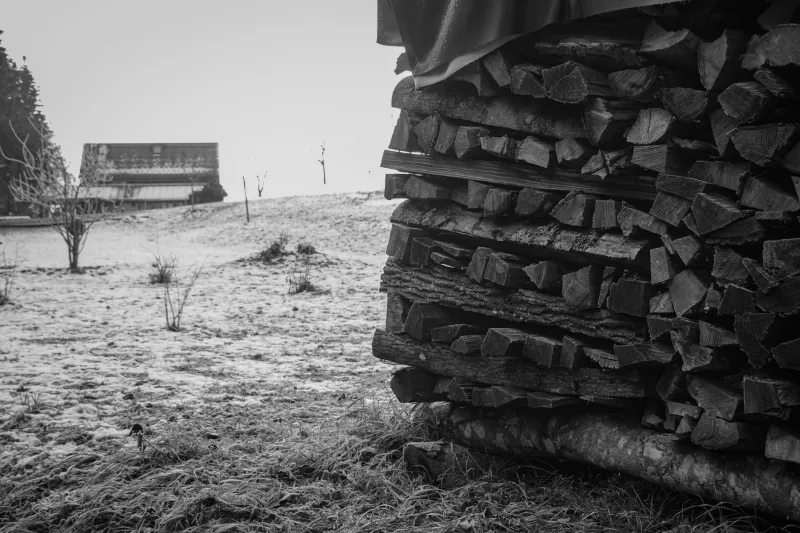
Most wet timber in a British garden did not arrive wet. It started as dry boards, kiln-dried battens or freshly split logs, then spent three months under a black tarpaulin in the shade of a fence. The rain got in, the air did not, and the whole pile turned into a mushroom farm with a timber core.
A seasoning stack is not a romantic woodpile. It is a small drying machine made from pallets, spacers and patience. Get the basics right and even a cramped garden can dry firewood, keep offcuts usable and bring green timber down to a sensible moisture content before it becomes a bench, a frame or a raised bed.
Air underneath is the first rule
Timber dries from the outside in, and it dries best when air can move around every face. That means getting the pile off the ground. A single pallet laid flat is fine; two pallets side by side make a wider bay. If pallets are not your thing, use pressure-treated bearers or a gravel pad with timber skids on top.
What you are avoiding is contact with soil, grass, concrete that stays cold and damp, or a puddle that appears every January. A gap of 100mm under the stack is enough to let air move and to stop ground moisture wicking up into the bottom layer. It also gives mice somewhere to live, but that is a separate article.
Point the stack at the wind, not the view
In the UK, the prevailing wind is broadly south-westerly. A stack built with its long face into that wind will catch more drying hours than one tucked into a lee corner beside a shed. Sun helps, but wind does more work in a damp climate. A sunny spot with a bit of breeze beats a hot, still corner every time.
That does not mean putting the stack in the middle of the lawn. Keep it away from house walls, dense hedges and solid fences, all of which create still, damp pockets. A metre of clearance on the windy side is worth more than a decorative screen.
Build in layers, with gaps you can see
For firewood, split logs dry far faster than whole rounds. Bark holds moisture, so a split face is doing you a favour. Stack loose, with the split sides exposed, and do not be tempted to pack the pile tight to make it look neat. A wall of firewood that resembles brickwork is a wall of trapped air.
For garden timber and offcuts, use stickers. These are thin strips of scrap wood placed between boards so air can pass between the faces. Offcuts from the last project are perfect. Aim for 20mm to 25mm spacers, placed close to the ends and at regular intervals. If you are drying green boards, weight the top of the stack to reduce twisting and cupping.
Keep green timber separate from dry timber. A damp oak board next to a dry ash batten will happily share its moisture. Small gardens make this harder, so use two bays or two ends of one stack with a clear divider.
The roof is a hat, not a coat
A seasoning stack needs a roof, not a wrapping. A sheet of corrugated metal, a piece of rigid plastic or a simple plywood lid with a slope will shed rain. Give it an overhang of 150mm or so and weigh it down. Leave the sides open.
The tarpaulin mistake is understandable. It keeps the rain off, but it also traps humid air and condensation. If you must use a tarpaulin, use it as a temporary cover during a storm, not as a permanent skin. The same goes for plastic sheeting around the sides. Timber needs to breathe.
A moisture check that tells the truth
A cheap moisture meter is useful, but only if you use it properly. Push the pins into a freshly split face, not the grey end grain. End grain dries first and will flatter you. Test several pieces, not one, and test the centre of a split log where the moisture actually sits.
Firewood is generally ready when it reads below 20%, ideally around 15% to 18%. For garden timber that will be used outdoors, you are often aiming for a similar range, though structural work needs its own specification. If you do not have a meter, split a piece and feel the fresh face. Dry timber feels lighter, sounds sharper when two pieces are knocked together and shows fine cracks at the ends. Wet timber feels cool and heavy, and the fresh cut smells green or sour.
The tricky part is timber that only looks dry. A grey, cracked surface can hide a wet core. That is why the split test matters more than the appearance of the outside. Fungal staining, black spots or a musty smell are signs that the stack has been too still and too damp.
Time is part of the material
Softwoods and small split logs can be ready in six to twelve months in a good stack. Hardwoods take longer, often a year to eighteen months, and oak can test your patience further. Garden boards follow a rough rule of about 25mm of thickness per year of air drying, though species, shelter and season all move the numbers.
Stack in spring if you can, so the timber has a full drying season before next winter. If you are stacking in autumn, accept that the first few months are mostly about shedding surface water rather than real drying.
Keep it sensible near the house
A small stack beside a back door is convenient, but it is also a habitat. Keep firewood and offcuts away from air bricks, vents and timber cladding, and do not stack treated, painted or unknown salvage for burning. If you live in a smoke control area, check what you can burn before you rely on the stove.
A good seasoning stack is not pretty in the way a finished bench is pretty. It is a working pile: pallet base, open sides, a simple lid, a bit of wind and a moisture meter in the drawer. Do that, and the timber you store this year will be the timber you can actually use next year.