Plant Once, Cut for Decades: A Corner of Hazel for Stakes and Hurdles
There is a particular kind of garden spending that never quite feels like spending: the annual bundle of imported bean poles, the bag of pea sticks, the short stakes that arrive pale and straight and are firewood by the following autumn. They are cheap enough individually and expensive enough over a decade. The alternative is not a bigger shed or a better supplier. It is a corner of your garden doing something useful in the background while you get on with other things.
Hazel is the obvious candidate. It is native, it coppices hard, it grows in most of the UK, and it produces exactly the sort of thin, flexible, straight-ish rods that gardeners actually use. The catch is the timescale. This is not a project with a satisfying weekend reveal. It is a five-year conversation with a patch of ground.
Why hazel, and why a coppice rather than a hedge
A hazel hedge is clipped to keep it dense. A hazel coppice is cut to the ground to make it produce rods. They are the same species, Corylus avellana, managed in opposite directions. Coppicing relies on the fact that hazel regrows vigorously from the stump — the stool — sending up many stems rather than one trunk. Cut those stems on a cycle and you get a repeated crop of poles without ever replanting.
The cycle is usually five to seven years for garden-scale material. Shorter rotations give thinner rods for pea sticks and weaving. Longer ones give stouter stakes and handles. If you want both, plant enough stools to split the difference, or cut part of the patch on a shorter cycle and leave the rest a year or two longer.
Picking the corner: sun, soil and space
Hazel is not fussy, but it is not a bog plant either. It wants reasonable drainage and a decent amount of light. A corner that gets sun for half the day is fine. Deep shade will give you spindly growth that takes forever to thicken. If the corner is waterlogged in winter, plant on slight mounds or improve the drainage first — hazel roots sitting in cold water over winter is the usual way these plantings fail.
Allow more room than you think. A coppice stool will spread its roots and its regrowth beyond the original planting hole. A block of stools at 1.5 to 2 metres apart is workable for garden scale; closer spacing gives thinner rods, wider spacing gives stouter ones. Ten to fifteen stools is a sensible small patch — enough to cut something useful every year once it is established, without turning the whole lawn over.
Do not overlook access. You will be carrying bundles out of this corner for years, so leave a route you can actually use in wet weather.
Planting bare-root in winter
Bare-root hazel is planted in the dormant season, roughly November to March, as long as the ground is not frozen or sodden. Order from a UK nursery that supplies native hedging or coppice stock, and plant it as soon as it arrives rather than letting the roots dry out in a shed.
Clear a metre-wide patch around each planting position. Grass and weeds will outcompete a young hazel faster than anything else. Plant at the same depth the plant was lifted at, firm the soil properly — air pockets around roots are a quiet killer — and mulch with a ring of bark chip or well-rotted compost, keeping it clear of the stems.
Water through the first summer if it turns dry. After that, hazel is largely on its own, which is part of the appeal.
The first few years: weeds, rabbits and restraint
The main threats to a young coppice are rabbits, deer and your own impatience. Rabbits will ring the bark of young hazel stems with depressing efficiency. Spiral guards or mesh tubes around each stem are the standard answer; check them each autumn and replace any that have split. Where deer are present, a ring of stakes and mesh around the whole patch is more reliable than trying to guard individual stems.
Keep the base of each stool clear for the first two or three years. A strimmer is fine if you are careful; bark damage at ground level is another way to lose a plant. After the stools are established, a light mulch each spring is enough.
And then the difficult bit: leave it alone. The instinct is to cut something, anything, in year two. Resist. The plant is building root mass. Cutting too early sets it back and gives you a weak stool that never quite catches up.
The first cut, and why it looks drastic
Most garden coppices get their first proper cut somewhere around year three to five, depending on how well the plants have grown. The cut itself is simple: take each stem down to 5 to 10 centimetres above ground, using clean, sharp loppers or a pruning saw. Make a slightly angled cut so water runs off rather than sitting on the stool. Work from the outside in, and try not to tear the bark.
It will look brutal. A patch of hazel cut to ankle height in February looks like a mistake. It is not. Within a few months the stools will throw up multiple new shoots, and the regrowth is usually stronger than the original plant.
Do not cut in the growing season. Late winter, while the sap is down and the stools are dormant, is the standard window. That also means the cut material is at its least sappy, which helps it dry.
Seasoning and storing so poles last
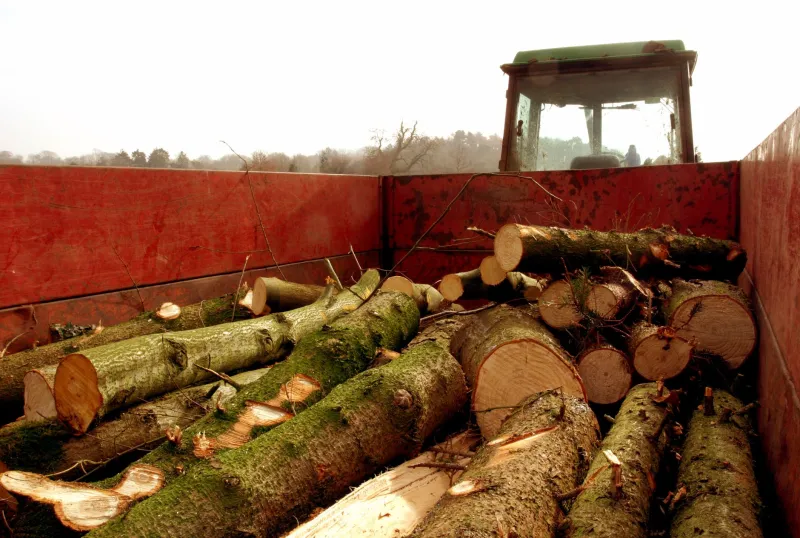
Freshly cut hazel is full of water and will shrink, twist and go mouldy if stacked in a heap. Bundle the rods by size, stand them upright or stack them horizontally with spacers between layers, and keep them under cover with good airflow. A lean-to, an open-fronted shed or a covered rack is ideal. Air-drying takes several months; thinner rods will be ready sooner than stout stakes.
For hurdles and woven work, rods are often used green or partly seasoned, because flexibility matters more than hardness. For stakes and bean poles, dry them properly and store them off the ground. Hazel that stays damp will grey and soften; hazel kept dry will last for years and can be re-used.
The honest arithmetic
A small coppice will not make you self-sufficient in timber. It will, after a few years, cover a good share of your stakes, pea sticks and simple hurdles, and it will do so without a delivery van. The real return is not financial — it is having a material on hand that you know the history of, cut at the right time, dried properly and used until it fails.
The first cut is the slow one. Everything after that is a rhythm: cut in winter, dry through spring, use through summer, and let the stool rest again.