Small Timber, Big Return: Why a Bench Beats Another Backyard Building

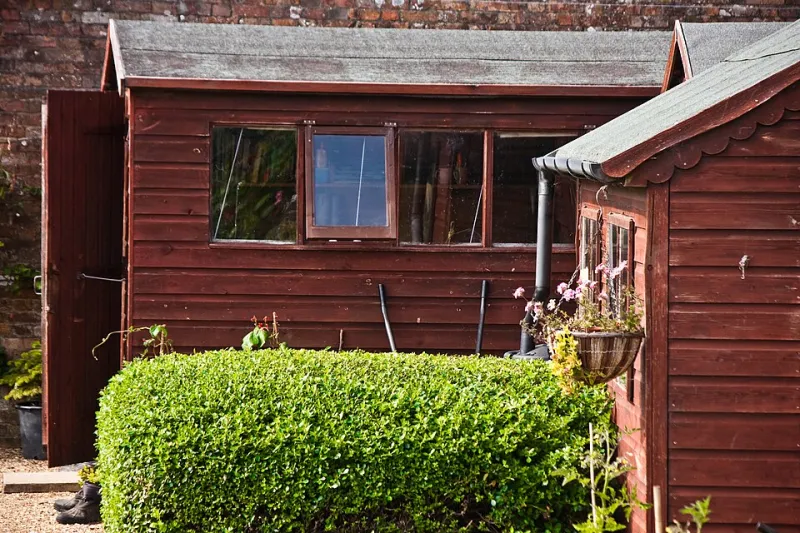
Photo: OathOn, CC BY-SA 4.0, via Wikimedia Commons
Walk along any suburban street in Britain on a Sunday and count the sheds over the back fences. Felt roofs, grey composite doors, a window that has never once been opened. Now count the benches. Usually there's one. It's plastic, it's been dragged around the lawn, and it faces the bins.
We have become very good at building outbuildings and strangely bad at building places to sit. A shed is a decision you make once, in a spreadsheet mood, and then live with for fifteen years. A bench is a decision you make every warm evening, usually by walking towards it with a mug in your hand. Only one of those gets used daily.
The garden as overflow storage
Somewhere in the last two decades the average back garden stopped being a place and became a container. A shed for the mower. A second shed for the bikes because the first one filled up. Decking because the neighbours have decking. A pergola over the decking that nobody sits under, because the decking faces north and the wind funnels between two fences.
None of this is wicked. Storage is genuinely useful and a garden does need somewhere to put things. But it's worth noticing what the trade-off actually is. Every square metre given over to a structure with a roof is a square metre that isn't planting, isn't lawn, isn't a bit of bare earth for a blackbird to rummage in. And most of these structures are, functionally, cupboards with planning implications.
Cost per sit
Try a rough bit of arithmetic. A mid-range timber shed, plus a base, plus delivery, plus the afternoon you lose levelling it, lands somewhere north of £1,500. You visit it perhaps three times a week, briefly, in shoes. Now price a decent oak or sweet chestnut bench: £300 to £600, no base required beyond two flat stones. You sit on it from April to October, most days, sometimes for forty minutes at a stretch.
The shed wins on storage capacity, obviously. But on minutes of human life per pound spent, it isn't remotely close. And unlike the shed, the bench makes the garden feel bigger rather than smaller, because a seat gives you a reason to look at the rest of it.
Proportion is nearly the whole game
Most disappointing garden woodwork fails on scale rather than joinery. A bench that's too big for its corner looks like a bus shelter. A bench jammed against a fence with the seat 300mm from the panel gives you nowhere to put your feet and a view of nothing but gravel board.
A few things worth thinking about before you buy or build:
- Allow roughly a metre of clear space beyond each end of the seat, if you can. That breathing room is what stops it feeling like furniture in a corridor.
- Set it back from the boundary by at least half a metre. You want to look out, not at.
- Choose the position by where the sun falls, not by where the lawn is most conveniently flat. Morning sun suits a coffee bench near the back door; evening sun suits one at the far end with a view back at the house.
- Think about the prevailing south-westerly. A bench behind a hedge or a shrub is usable a fortnight earlier in spring than one out in the open.
- Face something worth facing. A border, a tree, a bit of long grass, the neighbour's roof at a distance. Not the wheelie bins, not the side return.
If the garden is small — and plenty of British gardens are the size of a decent living room — this matters even more. On a tight plot, a bench may be the only piece of garden architecture you can justify, which is exactly why it should be good.
The numbers that make a seat comfortable
Comfort isn't mysterious. It's a handful of dimensions, and most cheap benches get at least two of them wrong.
- Seat height: 430–450mm from the ground to the top of the seat. Lower feels like a deckchair after twenty minutes.
- Seat depth: 420–470mm. Deeper and shorter people can't reach the backrest.
- Back rake: 15–20 degrees off vertical. Upright enough to drink tea, reclined enough to finish it slowly.
- Arm height: 200–230mm above the seat. You want to rest an elbow without shrugging.
- Front edge: eased or slightly rounded. A hard 90-degree arris will find the back of your knee within a season.
A bench that hits all five will be sat on. One that misses two will be used to hold a watering can.
Timber that earns its decade
Britain is hard on outdoor timber — wet, mild, rarely properly cold for long, and damp for most of the year. The species that cope are well known. Oak, ideally European or home-grown, will silver off and go slightly brittle in the sun but will outlive most of us. Sweet chestnut coppice is the underrated choice: naturally durable, lovely warm tone, and grown here. Robinia (black locust) is exceptionally rot-resistant if you can find it. Douglas fir works well if you accept it and treat it. Iroko and other tropical hardwoods perform beautifully, but ask where they came from before you buy — genuine certification or nothing.
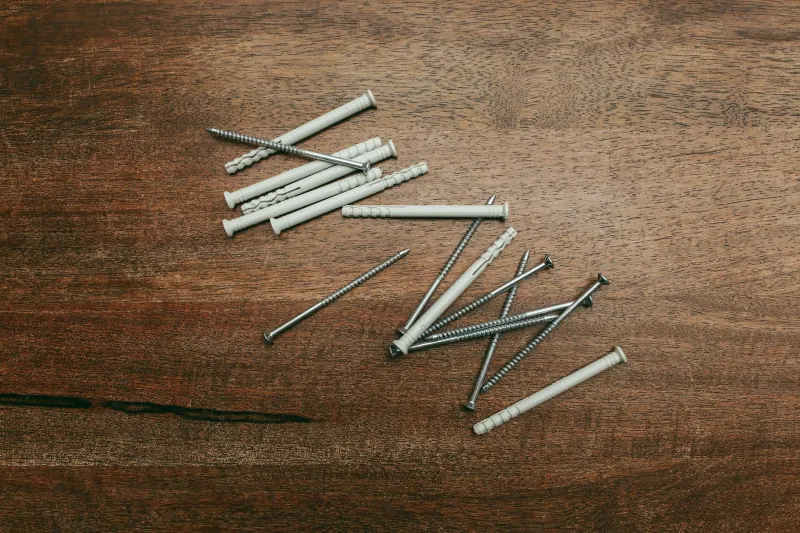
Fixings matter as much as the wood. Use stainless steel — A4 grade near the coast, A2 inland — and don't put galvanised screws into oak, because the tannins will attack the zinc and you'll get black staining and rust weeping. Seal end grain on any cut, keep the feet out of standing water on bearers or paving, and don't box the legs in so tightly that water sits in a trap.
Finish is a personal matter. Linseed oil every year or two keeps a warm colour; doing nothing lets it go grey, which most of us secretly prefer. What you must do is check the fixings each spring and tighten anything that's worked loose after frost. That's the whole maintenance regime.
Restraint, repeated
The same logic applies all the way down the scale. A well-made wooden step up to a lawn does more for a garden than a set of decking stairs to nowhere. Two planters at the right height beat a raised bed that's too deep to reach across. A simple timber lath screen that hides the bins is worth more than a pergola that shades a patio nobody uses.
None of these are impressive on a spreadsheet, and none of them will impress a visiting relative the way a new shed does. They're just the things you'll touch every day. Build small, place it properly, buy honest timber, and then go and sit down.