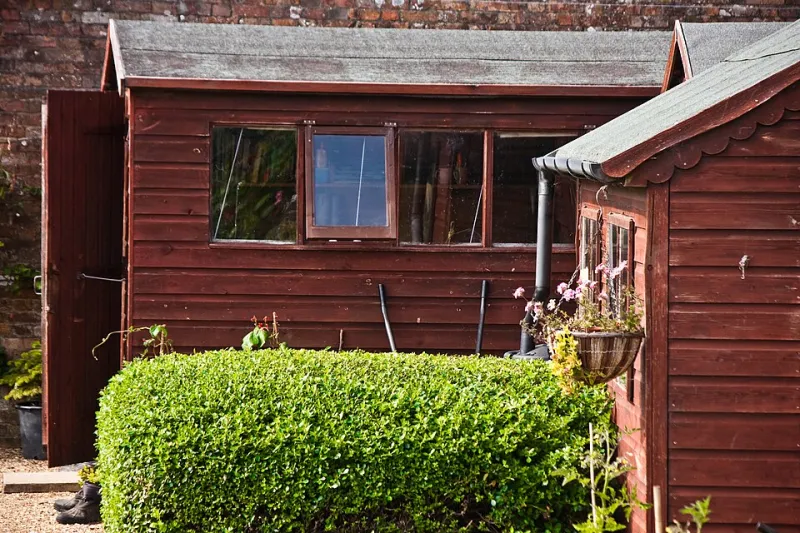
Plant the Border Before You Build the Bench: Designing a Garden That Grows With Its Timber
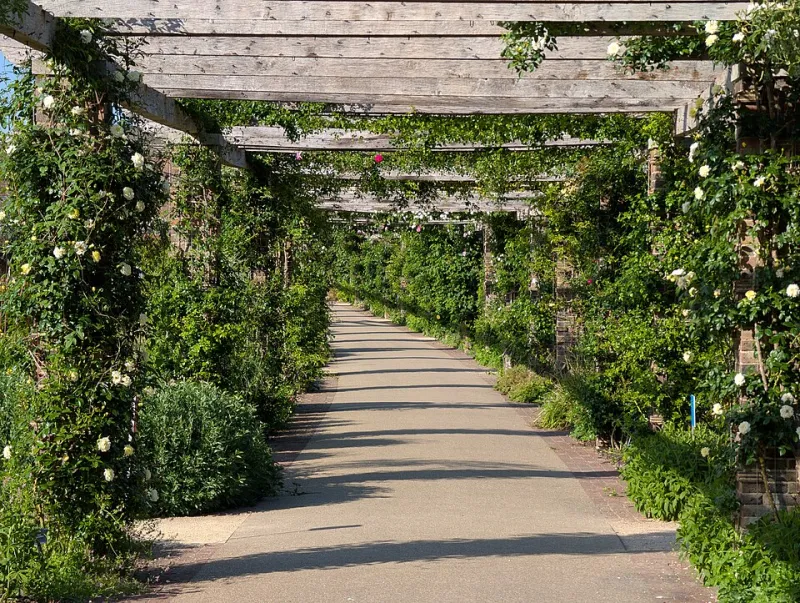
Photo: Andy Li, CC0, via Wikimedia Commons
There is a familiar sequence in British garden design. We decide where the shed goes. Then the deck. Then the pergola. Then, with the hard landscaping done and the budget gone, we buy a few pots and a shrub from the garden centre and call it planting. The result can look sharp for a season. Three years later, the shed is half-hidden by an overgrown cotoneaster, the pergola is draped in a climber that has pulled the gutter off, and the bench sits in a bog because the border behind it never drains.
I think we have the order wrong. Planting should not be the decoration applied after the timber. It should be part of the structure's design brief.
The Garden Is the Client
A shed, bench or pergola is not a stage set. It has to sit in a living system that is trying to grow into it, under it and over it. Roots will travel. Leaves will fall. Shade will move. Soil will stay wetter on one side. If we design the timber first and the planting second, we spend the next decade fighting the consequences.
This is not an argument against timber. It is an argument for giving timber a better chance. A garden that grows around its structures is more forgiving, more interesting and, frankly, less expensive to maintain. But it needs a bit of forethought before the first post goes in.
Roots Before Footings
The most expensive mistake is a post hole in the wrong place. Before you mark out a shed base, look at the trees and hedges that will be staying. The roots you can see are only part of the story. A mature birch or willow can have roots well beyond the canopy, and a hedge is a continuous root barrier in miniature.
As a rule of thumb, keep new footings outside the spread of a mature tree's canopy, and further away on clay or in wet ground. If you must build close, consider a ground screw or a shallow pad that avoids major roots — but get advice rather than cutting through them and hoping. A shed that undermines a tree is a shed with a future subsidence problem. A tree that undermines a shed is worse.
This is also a reason to plant long-lived trees and hedges early. If a tree is going to be part of the composition, it needs a head start. Put it in before the structure, protect it while the building work happens, and let it establish.
Shade, Damp and the Things That Grow on Timber
Timber and plants both need water, but they do not need it in the same place. A dense border pressed against a shed wall keeps the timber damp, reduces airflow and encourages mould, algae and rot. The same is true of a pergola post surrounded by boggy soil.
Leave a gap. A gravel strip, a narrow path or a low planting zone that keeps soil and mulch away from the timber is not a waste of space. It is maintenance access and ventilation. It also stops the mower throwing damp grass against the boards.
Shade is more complicated. A bench in full sun is lovely in April and unusable in July. A pergola with a deciduous climber gives summer shade and winter light. A shed tucked under a tree may stay green and slippery. Think about what the structure needs from the planting, not just what the planting will look like.
Leaf Litter Is a Design Detail
Every garden has leaves. The question is where they end up. A shed gutter under a silver birch will block. A deck under an oak will stain. A pergola over a pond will fill it.
Choose deciduous planting with its autumn deposit in mind, and put the structure upwind or well away from gutters and decks. If you cannot avoid it, design for cleaning: accessible gutters, removable deck boards, a leaf guard. This sounds dull, but it is the difference between a structure that ages well and one that rots quietly under a compost heap of wet leaves.
Maintenance Access Is Not a Luxury
We are good at designing the view from the kitchen window. We are less good at designing the route to the back of the shed. Leave enough space to get a ladder, a wheelbarrow and a pair of secateurs around the structure. Do not plant a dense hedge tight against a fence and then wonder how you will paint it.
Access also matters for the fixing. A pergola joint you cannot reach is a joint you cannot check. A deck bearer you cannot see is a bearer you cannot repair. Plant with a maintenance route in mind, and the timber will last longer because you can actually look after it.
Phase It, Don't Rush It
A garden is not a building project with a completion date. It is a series of changes. Plant the long-lived things first — trees, hedges, the structural shrubs — and give them a year or two to settle. Build the shed or bench when you know how the light falls and where the ground stays wet. Add the pergola when you know which way you sit in the evening.
This phasing also protects the planting. Building work compacts soil and damages roots. If you can keep heavy work away from new beds, or protect them with boards, the garden recovers faster. If the budget will not stretch to everything at once, temporary pots and climbers on a wire can fill the gap without committing the planting plan forever.
Let It Age Together
The best gardens I know do not look finished. The timber has silvered, the paint has weathered, the climber has found its own way along the beam. That only happens when the structure and the planting were introduced to each other early enough to negotiate.
So plant the border before you build the bench. Not every plant, and not all at once. But decide where the roots go, where the shade falls, where the leaves land and how you will reach the back of the shed. Then build. The timber will thank you, and the garden will look like it was meant.